

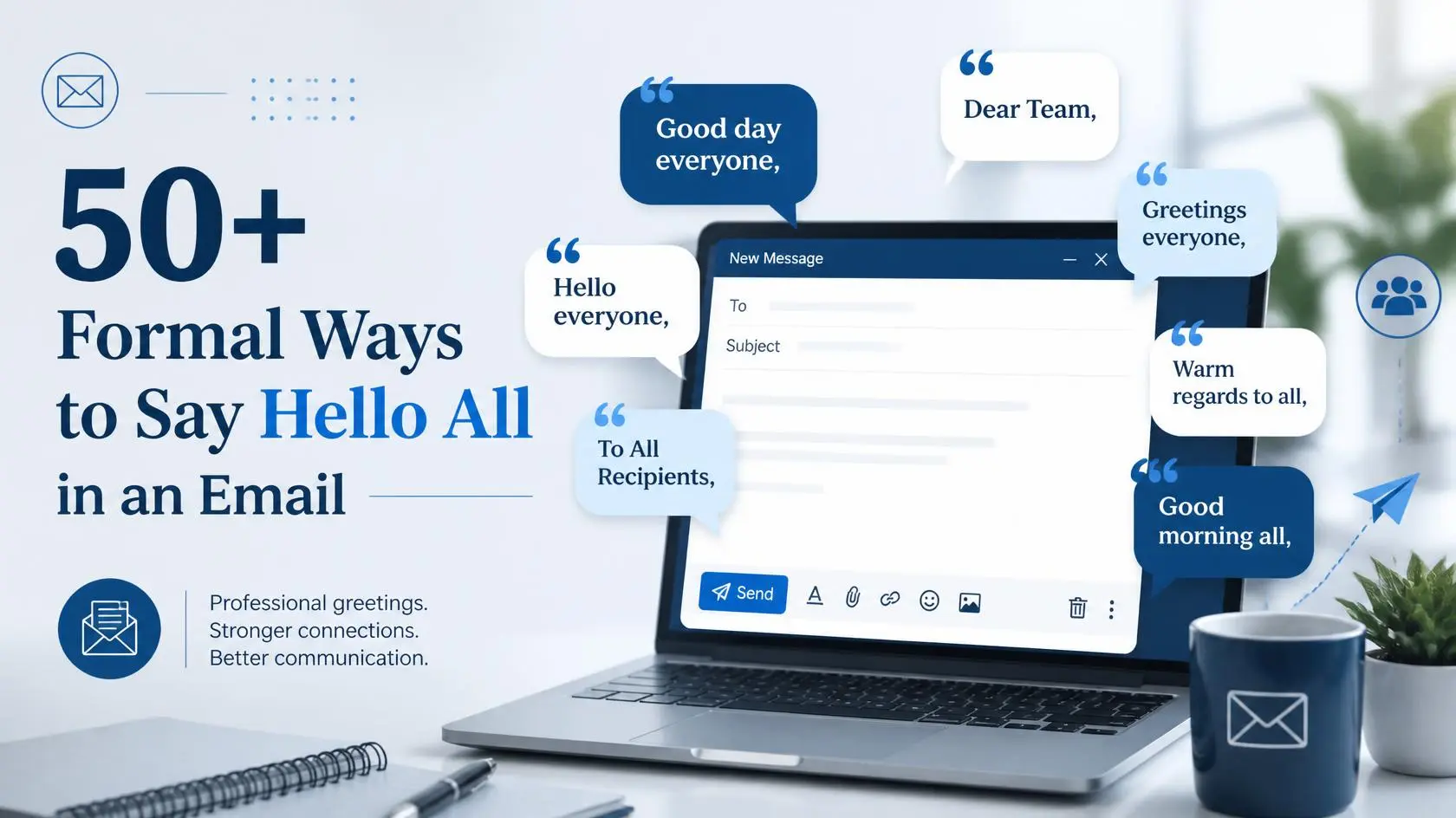
The way you begin an email sets the tone for everything that follows. While “Hello all” is a common greeting, it can sometimes feel too generic, repetitive, or informal depending on your audience. Whether you’re writing to coworkers, clients, managers, students, or an entire organization, choosing a more polished greeting helps create a stronger first impression.
Many professionals look for formal ways to say “Hello all” in an email because they want their messages to sound respectful, inclusive, and engaging. A thoughtful opening demonstrates professionalism while making recipients feel acknowledged. Fortunately, there are plenty of alternatives that suit different business situations, from team updates and project discussions to client communications and company announcements. In this guide, you’ll discover over 50 professional greetings that help your emails sound natural, confident, and appropriate for every workplace setting.
What Does “Formal Ways to Say Hello All in an Email” Mean?
The phrase “formal ways to say hello all in an email” refers to professional alternatives you can use instead of the common greeting “Hello all.”
These greetings are designed to address multiple recipients politely while matching the tone of business communication. Depending on your audience, they can sound respectful, welcoming, appreciative, or authoritative.
For example, an email to your department might begin with “Good morning, everyone,” while a message to clients could start with “Dear Valued Clients,” to create a more professional impression.
Using varied greetings also helps your emails feel more personalized and prevents your communication from becoming repetitive.
When to Use It
Formal alternatives to “Hello all” are useful in many professional and semi formal situations.
Business Emails
When communicating with coworkers, managers, or leadership teams, a polished greeting reflects professionalism.
Example:
“Good afternoon, everyone. I wanted to share this week’s project updates.”
Client Communication
Professional greetings help establish trust and respect.
Example:
“Dear Valued Clients, thank you for your continued partnership.”
Team Announcements
Addressing an entire team with an inclusive greeting creates a positive atmosphere.
Example:
“Greetings, Team. Please review the attached meeting agenda.”
Educational Settings
Teachers, professors, and administrators often email groups of students.
Example:
“Dear Students, your assignment deadline has been updated.”
Organization Wide Messages
Company announcements benefit from formal yet welcoming greetings.
Example:
“Good morning, everyone. We are excited to announce a new initiative.”
Is It Polite or Professional?
Yes. Using formal alternatives to “Hello all” is both polite and professional when chosen appropriately.
In workplace communication, greetings such as “Good morning, everyone,” or “Dear Team,” sound more polished than simply writing “Hello all.” They show consideration for your audience and help create a respectful tone from the very beginning.
For casual conversations among close colleagues, a simple greeting may be perfectly acceptable. However, when writing to clients, executives, large groups, or people you do not know well, selecting a more refined opening makes your email feel thoughtful and credible.
The best greeting depends on your audience, your relationship with them, and the purpose of your message.
1. Good Morning, Everyone
Meaning: A warm and professional greeting used in morning emails.
Tone: Professional and welcoming
Example Sentence: Good morning, everyone. I hope you’re having a productive start to the day.
Explanation: This greeting feels courteous while setting a positive tone for the rest of the email.
Purpose and Personalization: Ideal for daily updates, team meetings, and workplace announcements.
2. Good Afternoon, Everyone
Meaning: A respectful greeting for emails sent during the afternoon.
Tone: Formal
Example Sentence: Good afternoon, everyone. Please find today’s meeting summary below.
Explanation: It acknowledges the time of day and sounds polished.
Purpose and Personalization: Best for business updates and internal communications.
3. Good Evening, Everyone
Meaning: A professional greeting suitable for evening communication.
Tone: Respectful
Example Sentence: Good evening, everyone. Thank you for your participation in today’s event.
Explanation: Appropriate for global teams or after hours correspondence.
Purpose and Personalization: Works well for international organizations.
4. Dear Team
Meaning: Addresses your immediate team collectively.
Tone: Professional and collaborative
Example Sentence: Dear Team, thank you for your hard work on this project.
Explanation: One of the most widely accepted business greetings.
Purpose and Personalization: Perfect for internal emails among coworkers.
5. Dear Everyone
Meaning: A friendly yet professional group greeting.
Tone: Warm and respectful
Example Sentence: Dear Everyone, I appreciate your continued support.
Explanation: More personal than “Hello all” while remaining professional.
Purpose and Personalization: Suitable for mixed workplace audiences.
6. Greetings, Everyone
Meaning: A polished alternative to a standard hello.
Tone: Formal and welcoming
Example Sentence: Greetings, everyone. I hope this message finds you well.
Explanation: Creates a positive first impression without sounding overly formal.
Purpose and Personalization: Ideal for newsletters and group announcements.
7. Greetings, Team
Meaning: Welcomes your team collectively.
Tone: Professional
Example Sentence: Greetings, Team. Here are the updates for this week’s priorities.
Explanation: Encourages unity while maintaining professionalism.
Purpose and Personalization: Great for project management emails.
8. Dear Colleagues
Meaning: A respectful greeting for coworkers and peers.
Tone: Formal
Example Sentence: Dear Colleagues, thank you for attending yesterday’s workshop.
Explanation: Commonly used in corporate and academic settings.
Purpose and Personalization: Excellent for department wide communication.
9. Dear Members
Meaning: Addresses members of an organization or committee.
Tone: Professional
Example Sentence: Dear Members, we are pleased to invite you to our annual meeting.
Explanation: Appropriate when writing to clubs, associations, or professional groups.
Purpose and Personalization: Works well for membership organizations.
10. Dear Participants
Meaning: A formal greeting for attendees of a meeting or event.
Tone: Respectful
Example Sentence: Dear Participants, thank you for registering for the upcoming workshop.
Explanation: Clearly identifies the audience.
Purpose and Personalization: Best for training sessions, webinars, and conferences.
11. Dear Valued Clients
Meaning: Shows appreciation while greeting customers.
Tone: Professional and appreciative
Example Sentence: Dear Valued Clients, thank you for your continued trust in our services.
Explanation: Builds positive client relationships.
Purpose and Personalization: Ideal for customer communication.
12. Dear Valued Customers
Meaning: A respectful greeting for customer focused emails.
Tone: Courteous
Example Sentence: Dear Valued Customers, we are excited to introduce our newest features.
Explanation: Emphasizes appreciation and professionalism.
Purpose and Personalization: Suitable for promotional or informational emails.
13. Dear Students
Meaning: A professional greeting for educational settings.
Tone: Warm and formal
Example Sentence: Dear Students, please review the updated course schedule.
Explanation: Frequently used by teachers and professors.
Purpose and Personalization: Perfect for schools, colleges, and universities.
14. Dear Faculty and Staff
Meaning: Addresses employees within an educational institution.
Tone: Professional
Example Sentence: Dear Faculty and Staff, thank you for your continued dedication.
Explanation: A clear and inclusive greeting.
Purpose and Personalization: Best for campus wide announcements.
15. Dear Friends and Colleagues
Meaning: Combines warmth with professionalism.
Tone: Friendly and respectful
Example Sentence: Dear Friends and Colleagues, thank you for joining today’s discussion.
Explanation: Suitable when recipients know each other well.
Purpose and Personalization: Excellent for nonprofit organizations and community groups.
16. To All Team Members
Meaning: Clearly addresses every member of a team.
Tone: Direct and professional
Example Sentence: To All Team Members, please submit your weekly reports by Friday.
Explanation: Straightforward and effective.
Purpose and Personalization: Ideal for operational updates.
17. To Everyone
Meaning: A simple but polished way to address a group.
Tone: Neutral and professional
Example Sentence: To Everyone, thank you for your flexibility during this transition.
Explanation: Concise, inclusive, and suitable for many business situations.
Purpose and Personalization: A versatile greeting for company wide or department wide emails.
18. Dear All
Meaning: A classic formal greeting used when addressing a group of recipients.
Tone: Professional and concise
Example Sentence: Dear All, please find the updated project timeline attached for your review.
Explanation: This is one of the most common alternatives to “Hello all” in professional emails. It is simple, respectful, and widely accepted.
Purpose and Personalization: Best suited for workplace announcements, team updates, and organizational communication.
19. Hello Everyone
Meaning: A slightly more polished version of “Hello all.”
Tone: Friendly and professional
Example Sentence: Hello Everyone, I hope you are doing well. I wanted to share an important update.
Explanation: It keeps the friendliness of a casual greeting while remaining appropriate for professional settings.
Purpose and Personalization: Great for internal emails where you already have a comfortable relationship with recipients.
20. Hello Team
Meaning: A direct greeting for members of the same group or department.
Tone: Collaborative
Example Sentence: Hello Team, thank you for your dedication and effort during this project.
Explanation: This greeting creates a sense of teamwork and belonging.
Purpose and Personalization: Ideal for managers communicating with employees or project groups.
21. Greetings, Colleagues
Meaning: A respectful way to address professional peers.
Tone: Formal and courteous
Example Sentence: Greetings, Colleagues. I would like to share some important updates regarding our upcoming plans.
Explanation: It sounds professional without feeling overly distant.
Purpose and Personalization: Suitable for corporate, academic, and professional environments.
22. Dear Department Members
Meaning: A greeting directed toward people within a specific department.
Tone: Formal and organized
Example Sentence: Dear Department Members, please review the attached guidelines before our next meeting.
Explanation: This greeting clearly identifies the audience and maintains professionalism.
Purpose and Personalization: Useful for department wide announcements.
23. Dear Project Team
Meaning: Addresses members working on a specific project.
Tone: Professional and focused
Example Sentence: Dear Project Team, I appreciate everyone’s contribution to achieving our recent milestone.
Explanation: Shows recognition while keeping communication focused.
Purpose and Personalization: Perfect for project updates and collaboration emails.
24. Dear Committee Members
Meaning: Used when writing to members of a formal group or committee.
Tone: Respectful and official
Example Sentence: Dear Committee Members, thank you for your valuable input during our recent discussion.
Explanation: This greeting matches formal organizational communication.
Purpose and Personalization: Best for boards, panels, and professional committees.
25. Dear Board Members
Meaning: A formal greeting for executives or board representatives.
Tone: Highly professional
Example Sentence: Dear Board Members, I am pleased to provide the quarterly performance report.
Explanation: It acknowledges the authority and position of recipients.
Purpose and Personalization: Appropriate for executive level communication.
26. Dear Leadership Team
Meaning: Addresses managers, executives, or organizational leaders.
Tone: Formal and respectful
Example Sentence: Dear Leadership Team, I would like to discuss the proposed strategic changes.
Explanation: This greeting recognizes the professional role of the recipients.
Purpose and Personalization: Ideal for management related emails.
27. Dear Management Team
Meaning: A greeting for company managers or supervisors.
Tone: Professional
Example Sentence: Dear Management Team, please review the attached operational report.
Explanation: Creates a formal and structured opening.
Purpose and Personalization: Useful for internal business communication.
28. Dear Support Team
Meaning: Addresses a customer service or assistance group.
Tone: Respectful and direct
Example Sentence: Dear Support Team, thank you for your quick response regarding my request.
Explanation: Clearly identifies the intended recipients.
Purpose and Personalization: Suitable for workplace and customer service emails.
29. Dear Hiring Team
Meaning: A professional greeting when contacting recruiters or employers.
Tone: Formal and career focused
Example Sentence: Dear Hiring Team, I appreciate your consideration of my application.
Explanation: A more personalized alternative to generic greetings.
Purpose and Personalization: Best for job applications and recruitment communication.
30. Dear Recruitment Team
Meaning: Used when communicating with people responsible for hiring.
Tone: Professional
Example Sentence: Dear Recruitment Team, I am writing to express my interest in the available position.
Explanation: Shows awareness of the recipient’s role.
Purpose and Personalization: Ideal for employment related emails.
31. Dear Partners
Meaning: A formal greeting for business partners or collaborators.
Tone: Professional and appreciative
Example Sentence: Dear Partners, we sincerely appreciate your continued cooperation.
Explanation: Highlights the importance of the relationship.
Purpose and Personalization: Suitable for business partnerships and collaborations.
32. Dear Stakeholders
Meaning: Addresses people with an interest or responsibility in a project or organization.
Tone: Formal and corporate
Example Sentence: Dear Stakeholders, we are sharing the latest progress report for your review.
Explanation: Common in business, nonprofit, and organizational communication.
Purpose and Personalization: Best for official reports and updates.
33. Dear Associates
Meaning: A professional greeting for colleagues or business connections.
Tone: Formal
Example Sentence: Dear Associates, thank you for your commitment to our shared goals.
Explanation: Creates a respectful and professional impression.
Purpose and Personalization: Useful in corporate environments.
34. Dear Team Members
Meaning: A clear and inclusive way to address everyone in a team.
Tone: Professional and encouraging
Example Sentence: Dear Team Members, your dedication has played an important role in our success.
Explanation: Recognizes individual contributions while addressing the whole group.
Purpose and Personalization: Excellent for appreciation emails and announcements.
35. To Our Valued Team
Meaning: A warmer greeting that expresses appreciation toward employees.
Tone: Appreciative and motivational
Example Sentence: To Our Valued Team, thank you for your continued commitment and hard work.
Explanation: Adds a personal touch while maintaining professionalism.
Purpose and Personalization: Perfect for leadership messages and company updates.
36. Welcome, Everyone
Meaning: A greeting used when introducing a meeting, event, or new initiative.
Tone: Warm and inviting
Example Sentence: Welcome, Everyone. We are excited to begin today’s training session.
Explanation: Creates a positive atmosphere and encourages engagement.
Purpose and Personalization: Best for workshops, webinars, and presentations.
37. Welcome Team
Meaning: A friendly greeting for team gatherings or announcements.
Tone: Encouraging
Example Sentence: Welcome Team. We are excited to share the next steps of our project.
Explanation: Helps create a sense of unity.
Purpose and Personalization: Suitable for internal communication.
38. Good Day, Everyone
Meaning: A formal alternative that works regardless of the exact time.
Tone: Polished and neutral
Example Sentence: Good Day, Everyone. I would like to provide an update regarding our upcoming schedule.
Explanation: Useful when you are unsure when recipients will read the email.
Purpose and Personalization: Works well for professional and international communication.
39. I Hope This Message Finds You Well
Meaning: A courteous opening that expresses goodwill before starting the main message.
Tone: Formal and considerate
Example Sentence: I hope this message finds you well. I am reaching out regarding our upcoming meeting.
Explanation: A widely used professional opening that creates a respectful tone.
Purpose and Personalization: Best for external emails, clients, and formal correspondence.
40. I Trust You Are Doing Well
Meaning: A polite expression showing concern for the recipient’s wellbeing.
Tone: Formal and thoughtful
Example Sentence: I trust you are doing well. I wanted to follow up on our previous conversation.
Explanation: Adds warmth without becoming too casual.
Purpose and Personalization: Suitable for professional relationships and business emails.
40. Dear All Concerned
Meaning: A formal greeting used when addressing everyone involved in a particular matter.
Tone: Formal and professional
Example Sentence: Dear All Concerned, please review the attached documents before the upcoming meeting.
Explanation: This greeting is useful when the recipients are connected by a specific responsibility or issue rather than a personal relationship.
Purpose and Personalization: Suitable for administrative emails, official notices, and workplace updates.
41. Attention Everyone
Meaning: A direct greeting used to highlight an important message.
Tone: Formal and authoritative
Example Sentence: Attention Everyone, please note the updated guidelines effective from next week.
Explanation: This phrase immediately signals that the information requires awareness or action.
Purpose and Personalization: Best for announcements, policy updates, and urgent communications.
42. To Whom It May Concern
Meaning: A traditional formal greeting used when the specific recipient is unknown.
Tone: Very formal
Example Sentence: To Whom It May Concern, I am writing regarding the attached recommendation letter.
Explanation: While common in official letters, it is less personal for group emails and should be used only when necessary.
Purpose and Personalization: Appropriate for formal documentation rather than internal team conversations.
43. Dear Department Members
Meaning: A greeting directed toward members of a specific department.
Tone: Professional and organized
Example Sentence: Dear Department Members, please find the latest updates regarding our upcoming goals.
Explanation: This greeting creates a sense of belonging and works well for department wide communication.
Purpose and Personalization: Ideal for corporate departments and academic divisions.
44. Dear Project Team
Meaning: A greeting specifically for people working on the same project.
Tone: Collaborative and professional
Example Sentence: Dear Project Team, thank you for your dedication and effort throughout this phase.
Explanation: It recognizes the shared purpose of the recipients.
Purpose and Personalization: Best for project updates, deadlines, and team discussions.
45. Dear Management Team
Meaning: A formal greeting for managers or leadership groups.
Tone: Respectful and professional
Example Sentence: Dear Management Team, I would like to present the findings from our recent analysis.
Explanation: Shows respect toward senior professionals.
Purpose and Personalization: Suitable for executive reports and leadership communication.
46. Dear Leadership Team
Meaning: A greeting used when addressing organizational leaders.
Tone: Formal and respectful
Example Sentence: Dear Leadership Team, I appreciate your guidance throughout this initiative.
Explanation: Creates a professional tone while acknowledging authority.
Purpose and Personalization: Useful for strategic updates and executive emails.
47. Hello Team Members
Meaning: A slightly more relaxed alternative while remaining professional.
Tone: Friendly and professional
Example Sentence: Hello Team Members, I hope everyone is doing well. Here are today’s updates.
Explanation: This greeting balances warmth with workplace professionalism.
Purpose and Personalization: Great for internal team communication where a friendly tone is encouraged.
48. Welcome Everyone
Meaning: A greeting used when introducing an event, meeting, or new initiative.
Tone: Warm and inviting
Example Sentence: Welcome Everyone, we are excited to begin today’s training session.
Explanation: Creates a positive atmosphere and makes recipients feel included.
Purpose and Personalization: Perfect for workshops, webinars, and group events.
49. Greetings and Welcome, Everyone
Meaning: A formal yet warm opening for group communication.
Tone: Professional and encouraging
Example Sentence: Greetings and Welcome, Everyone. We are delighted to have you join this important discussion.
Explanation: Combines professionalism with a welcoming attitude.
Purpose and Personalization: Best for conferences, seminars, and formal gatherings.
50. A Warm Welcome to Everyone
Meaning: Expresses friendliness and appreciation toward a group.
Tone: Warm and formal
Example Sentence: A Warm Welcome to Everyone. We are pleased to have you participate in today’s session.
Explanation: Helps create a positive emotional connection with recipients.
Purpose and Personalization: Ideal for introductions, events, and organizational announcements.
Conclusion
Choosing the right greeting can transform a simple email into a more professional and engaging conversation. While “Hello all” is acceptable in many situations, using thoughtful alternatives allows you to match your message with the right tone and audience. Whether you are writing to colleagues, clients, students, or a large organization, the right opening creates a stronger first impression. Experiment with different greetings based on your purpose, relationship, and communication style. A well chosen email greeting is a small detail that can make your professional communication feel more polished and personal.
Discover more
professional ways to say thank you for the clarification